By early October, the fall routine of afterschool activities in Boulder is nearly two months old. Many parents are now asking whether the activity they picked in August is the right one for the year.
The options cover team sports, art and music programs, robotics and coding clubs, martial arts, climbing, and fencing.
This guide covers the main categories of kids activities in Boulder, what each one builds, and what to weigh before you commit, starting with logistics. We run an epee fencing club, so we have a stake in one category. The rest of the guide should be useful even if your child never picks up a blade.
What an afterschool activity can do for a child
The CDC recommends that children and teens ages 6 to 17 get 60 minutes or more of moderate-to-vigorous physical activity each day, with muscle-strengthening and bone-strengthening activity at least three days a week. An active afternoon program covers a large share of that hour on the days it meets.
Organized sports add more than exercise, according to Steven Cuff, MD, a co-author of the American Academy of Pediatrics report on organized sports: “The camaraderie and teamwork needed on a playing field offers lasting lessons on personal responsibility, sportsmanship, goal-setting and emotional control.”
The main categories of kids activities in Boulder
Team sports
Soccer, basketball, lacrosse, volleyball, and swim teams give a child fitness, a shared goal, and a group of teammates.
Ask about the calendar before you sign up, because travel and club teams can claim most weekends. Playing time also depends on the roster, so ask how the coach decides it.
Arts: music, visual art, theater, and dance
The arts build creative expression and the habit of practice. Music lessons depend on daily repetition at home, so the real time commitment includes the practice between lessons.
Theater and dance add performance. Dance is also as physical as many sports.
Ask when performance-season rehearsals stack up, and whether a missed class can be made up.
STEM: robotics, coding, and science clubs
STEM programs build problem solving and the persistence to keep going after a build fails.
Most of this work happens seated, so a STEM-loving child often does best with an active pursuit elsewhere in the week.
Martial arts
Martial arts give a child a clear structure of progress and a respectful class culture. Progress is individual even though classes run in groups.
Ask how and when sparring or contact is introduced, and how instructors match partners by size and experience.
Outdoor programs and climbing
Climbing builds grip and whole-body strength. Each route is also a puzzle the climber has to work out.
Ask about supervision ratios, how belaying is taught and checked, and what the progression looks like after the first season.
Fencing
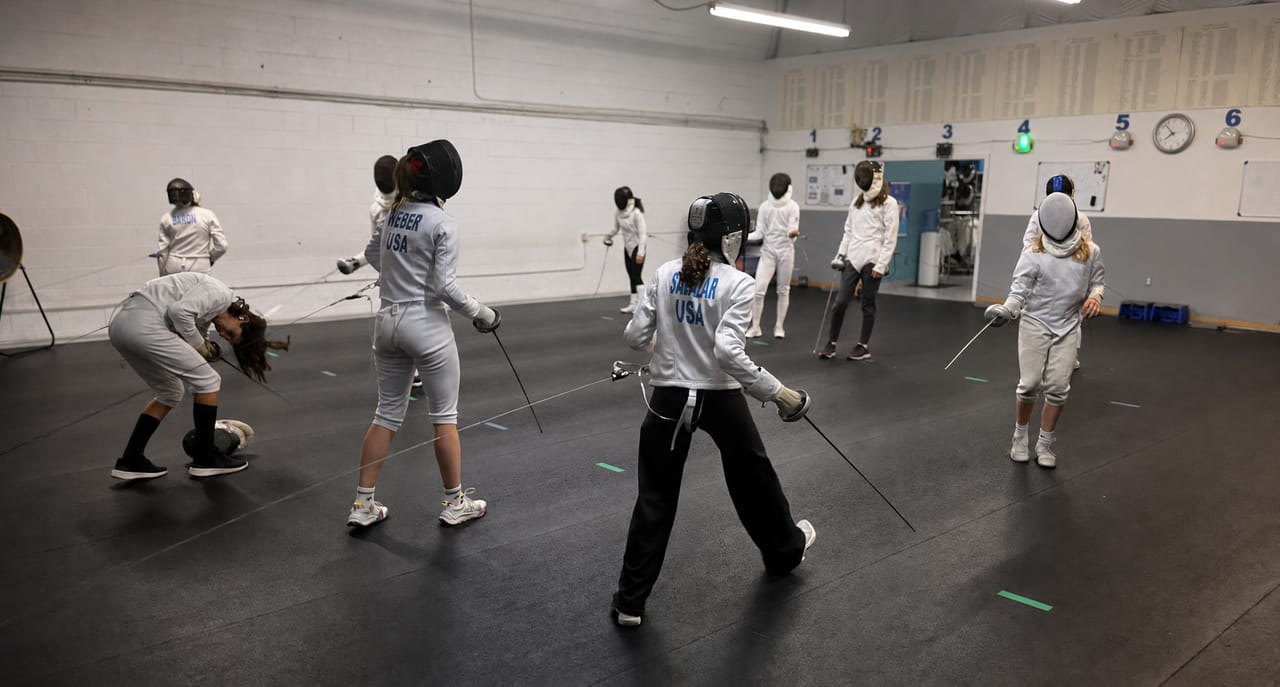
Fencing is a full-body sport built on quick footwork and lunges. Each bout is a contest of timing, of controlling the space between two fencers, and of reading an opponent.
In epee, the weapon we teach, the entire body is a valid target. When both fencers hit within 1/25th of a second of each other, both score. A beginner can follow the scoring in the first bout. Over time, young fencers learn that patience and good timing win more points than raw speed.
Fencers wear a mask, a jacket, and a glove. Fencing is also an NCAA sport with its own national championship. Our Epee Difference page explains the weapon in more depth.
What to weigh before you commit
Logistics
Check logistics first, because a program only works if your child can get there on time every week. The Boulder Valley School District moved in 2021 to a consistent seven-hour school day four days a week, with a one-hour late start on Wednesdays. One BVSD elementary school, for example, lists bell times of 7:50 a.m. to 2:50 p.m.
Check your own school’s dismissal time against each program’s start time, and count the drive between them. Then ask who gets your child from school to the program, whether it covers the whole afternoon for a working parent, and how many days a week it meets.
Safety
Ask the same safety questions everywhere: who supervises, what the coach-to-child ratio is, what protective gear is required, and how injuries are handled. The American Academy of Pediatrics encourages parents to ask about hiring procedures, codes of conduct, and communication between coach and athlete.
USA Fencing’s analysis of tournament results from August 2019 to July 2025 covered more than 637,000 elimination bouts (the knockout rounds of a tournament) and 44,527 competitors. A fencer withdrew for medical reasons in about 1 of every 296 bouts. The youngest competitors, age 10 and under, had some of the lowest rates of any group. Epee, the weapon NCF Boulder coaches, had the lowest rate of the three weapons. A medical withdrawal covers illness, dehydration, cramps, and pre-existing conditions as well as injuries, so withdrawals caused by injury are a subset of that count.
Skill development
Look for a program where your child improves week to week and can see the improvement. Good coaches give specific feedback and a clear next step.
Time and cost
Count the whole commitment: sessions per week, drive time, weekend events or performances, and equipment. Ask for that total up front.
Our own membership options are on the pricing page. The youth programs page shows how a beginner progresses.
Your child’s temperament
A social child who thrives in a crowd may love a team. An independent child who wants to own the result may do better in an individual sport, where every win and loss is his or her own.
Long-term pathway
Ask where the activity leads at 14 or 17, whether that is a high school team, regional competition, or a college program.
Sampling is healthy through the elementary years. A consensus statement from the American Orthopaedic Society for Sports Medicine found no evidence that young children benefit from early specialization in most sports. It also concluded that early multisport participation will not deter long-term competitive athletic success. If college matters to your family, our NCAA fencing pathway page explains how college fencing works.
A side-by-side comparison
| Category | What it builds | Format | Age guidance | Questions to ask |
|---|---|---|---|---|
| Team sports | Fitness, teamwork | Team, seasonal | Most children ready at about 6 (AAP) | Weekend travel, playing time |
| Arts | Creativity, practice habits | Individual or ensemble | Varies by program | Home practice, performance weeks |
| STEM | Problem solving, persistence | Small teams | Varies by program | Balance with movement |
| Martial arts | Discipline, body confidence | Individual in a group class | Varies by program | When sparring begins |
| Climbing and outdoor | Strength, route problem solving | Individual | Varies by program | Supervision, belay checks |
| Fencing | Strategy, footwork, composure | Individual in a group class | 7 and up at NCF Boulder | Protective gear, weekly schedule |
The American Academy of Pediatrics says most children are ready to play organized sports at about age 6. Individual programs set their own minimums.
How to test the fit
Try before you commit. One class tells you whether your child is curious, and three or four weeks tell you whether the interest holds.
Listen to how your child talks about the activity in the car afterward. A child who describes what happened, what went wrong, and what to try next time has found something that holds his or her attention.
Where fencing fits, and how to try it
NCF Boulder has coached epee since 1979, for beginners ages 7 and up. The program is led by Gary Copeland, founder and head coach, a USA Fencing Hall of Fame coach with 47 years of experience.
Book your first lesson to see how your child takes to epee. The lesson is complimentary.
Frequently Asked Questions
How do I choose the right afterschool activity for my child?
Start with logistics, since a program has to fit your school’s dismissal time and your family’s week before anything else matters. Then match the activity to your child’s temperament. Pick a program where your child can see his or her own progress. Give it a few weeks before you judge it.
Should my child specialize in one sport early?
Most children do not need to. A consensus statement from the American Orthopaedic Society for Sports Medicine found no evidence that young children benefit from early specialization in most sports. It also concluded that early multisport participation will not deter long-term competitive athletic success.
What age can a child start fencing?
NCF Boulder coaches epee for beginners ages 7 and up.
Is fencing safe for kids?
USA Fencing analyzed more than 637,000 elimination bouts (the knockout rounds) at tournaments from 2019 to 2025 and found a medical withdrawal in about 1 of every 296. The youngest competitors, age 10 and under, had some of the lowest rates of any group. A medical withdrawal counts illness and cramps as well as injuries. Fencers wear a mask, a jacket, and a glove. Bouts are supervised, and dangerous play is penalized.